
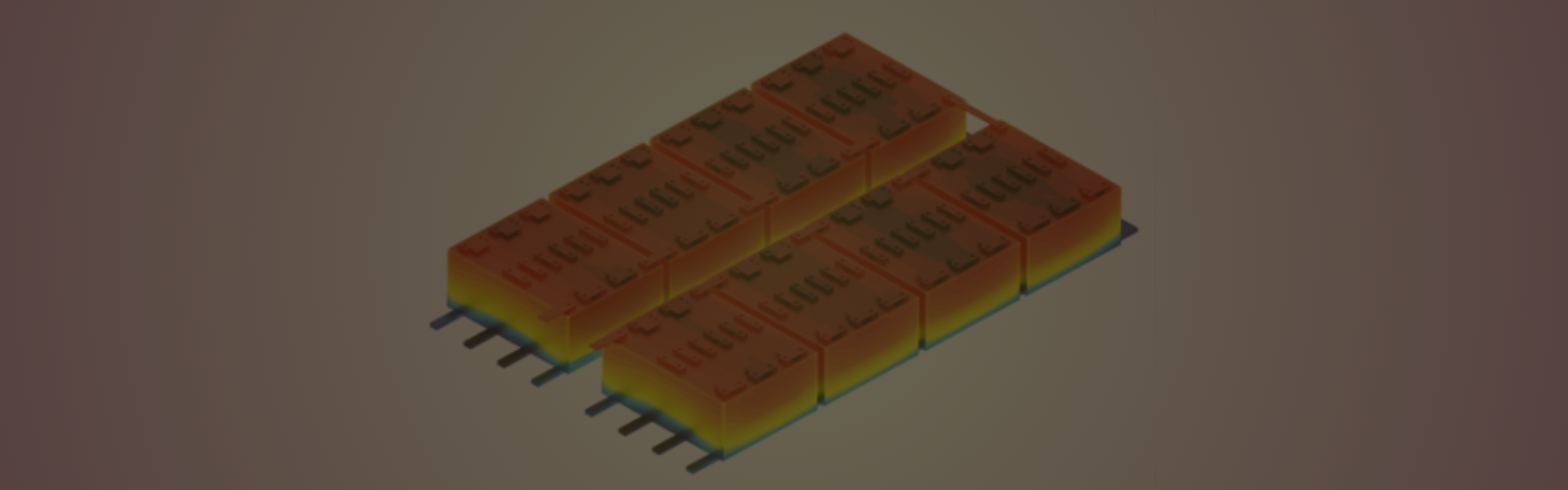
Authored by Samira Ranjbarrad – 11/20/2026
Battery safety is a vehicle-level design challenge. A crash, internal short circuit or thermal abuse can trigger thermal runaway, while heat transfer and vent gases determine whether a local event remains contained or propagates through a module or pack. As safety requirements become more demanding, Simcenter STAR-CCM+ gives engineering teams a 3D multiphysics environment to investigate these coupled behaviors, evaluate propagation risks and compare safety strategies before costly destructive testing [1, 2, 3].
The dedicated Simcenter STAR-CCM+ Batteries add-on further streamlines battery simulation with purpose-built workflows for electrothermal analysis, battery-pack cooling and thermal-runaway propagation. Its dedicated thermal-runaway workflow automates key setup steps for representing failed-cell heat release and propagation across large battery packs, helping engineers move from model setup to safety assessment faster while maintaining detailed physics-based analysis [2, 4].
The Challenge
Thermal runaway is a coupled event involving rapid heat release, conduction through cells and pack structures, pressure rise and hot-gas venting. Once initiated, these effects can interact with cooling passages, neighboring cells and enclosure geometry, creating a propagation risk at module and pack scale.
For battery engineers, the practical questions are clear: Where does failure start? How quickly can it spread? Which combination of cooling, cell spacing, venting, barriers and pack architecture can slow or contain propagation? Physical abuse testing remains essential, but simulation allows more concepts and failure scenarios to be examined before committing to repeated destructive tests.
The STAR-CCM+ Approach
Simcenter STAR-CCM+ connects electrothermal and thermal-runaway analysis within the same 3D battery model. Engineers can evaluate normal operation and cooling, then extend the model to failure initiation, propagation and safety assessment without rebuilding the simulation for each stage [2].
Transient simulations can combine cell heat release, conduction through neighboring components, convective transport, hot vent-gas flow and cooling-system interaction. Geometry, material properties, vent paths and protection features can be parameterized, while experimental inputs such as accelerated rate calorimetry (ARC) data can be used to inform the thermal-runaway model [2].
For deeper cell-level studies, STAR-CCM+ also supports Homogeneous Multiphase Complex Chemistry to represent decomposition and gas-generation reactions associated with thermal runaway. These detailed results can complement pack-level simulations and help connect cell chemistry, vent-gas behavior and system-level safety analysis [4].
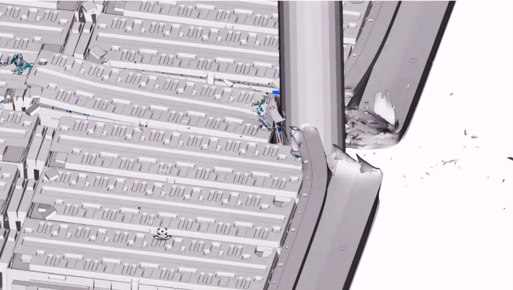
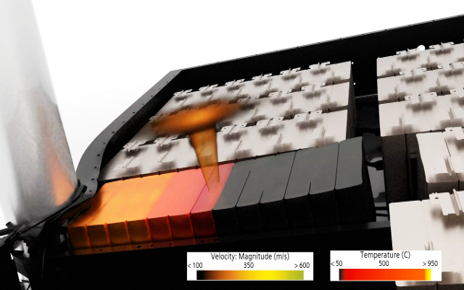
A connected 3D workflow links cell heat release, vent-gas transport, cooling and pack-level propagation behavior.
Use Cases
A focused thermal-runaway study can begin with a defined initiating event and track how heat and vent gases move through the pack. Engineers can monitor adjacent-cell temperatures, propagation timing, enclosure temperatures and vent paths to identify the mechanisms that turn a local failure into a wider safety event [2].
The same model can then compare design alternatives under consistent conditions. Changes to cell spacing, cooling strategy, thermal barriers, venting concepts or pack geometry can be evaluated against the same safety metrics, turning the simulation into a direct design comparison rather than a one-off failure calculation.
STAR-CCM+ automation, parameterization and Design Manager can extend this process across multiple variants, helping teams identify promising mitigation strategies earlier and focus physical abuse testing on the designs and scenarios that matter most [1, 2].
The result is a repeatable virtual screening workflow that complements physical testing: simulation helps reveal critical propagation pathways, while test data strengthens the model used for subsequent design decisions.
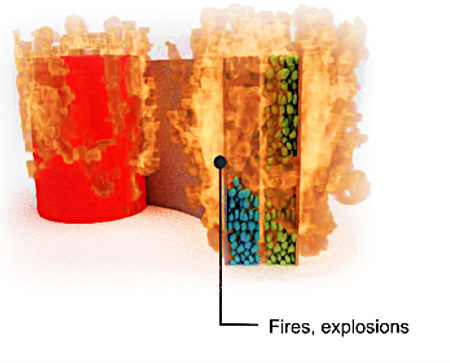
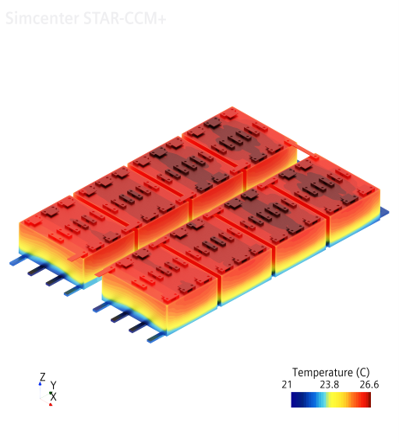
From cell-level failure to pack-level propagation, STAR-CCM+ helps engineers evaluate how thermal-runaway risks can be contained.
Key Takeaway
Simcenter STAR-CCM+ turns battery thermal-runaway analysis into a connected engineering workflow—from cell heat release and venting to pack-level propagation and mitigation. By combining 3D multiphysics, automation and design exploration, teams can compare safety concepts earlier, reduce repetitive destructive testing and make more informed decisions about which designs to validate physically.
Contact the LTS team or email us at contact@longtermtec.com to explore how Simcenter STAR-CCM+ can support battery thermal-management and thermal-runaway safety studies.
Sources
[1] Longterm Technology Services – Simcenter STAR-CCM+
[2] Siemens Simcenter Blog – Battery Simulation: Charging and Thermal Runaway
[3] LTS Webinar – Accelerating vehicle and aircraft design with STAR-CCM+ simulation
[4] Siemens Simcenter Blog – Battery Thermal Runaway Cell Chemistry Simulation

